


Cyperus Rotundus Oil
Cyperus Rotundus Oil
BUNDLE & SAVE
Couldn't load pickup availability

Cyperus Rotundus Oil
Botanical Body Oil, 60ml After-Shave and Post-Wax Moisturizer with Jojoba, Rosehip and Sweet Almond Oils for Silky Smooth Skin, All Skin Types


Why nothing else fades them
The marks that won't fade on their own.
Post-hair-removal hyperpigmentation, sun spots, and melasma all share one cause: melanocytes producing too much pigment in one spot. Brighteners that don't address the source just sit on the surface. Caramela's Even Tone targets the signal at the cell level — gently, daily, over weeks.
How it works
It targets the source, not the surface.
Most brighteners are bleaches that lighten what's already on your skin. Caramela's Even Tone is different — it tells your melanocytes to slow down on producing new pigment in the first place. Kojic acid and bearberry inhibit tyrosinase, the enzyme that drives melanin synthesis. Glycolic acid clears the dulled layer above so the new, evener skin can show through. Centella and aloe keep the whole process gentle.
The honest timeline
Real brightening takes 6 to 12 weeks.
Anything that promises overnight fading is either too harsh or not really working. Brighteners that actually fade pigment work by cycling out melanin — and that takes weeks. Here's what to expect, so you know it's working even before you see it.
The brightener that doesn't fight your skin.
Hydroquinone works fast but it's prescription-only and restricted for long-term use. Laser/IPL works but it's expensive and risky on darker tones. Caramela's Even Tone uses clinically studied actives that brighten gently, daily, at home.


How to Use

What's inside matters
Clinically studied actives. Botanical soothers.
Every ingredient has a job. The brighteners do the work; the soothers make sure your skin stays happy doing it nightly for 12 weeks.
-

Kojic Acid
Aspergillus oryzae derivative
inhibits tyrosinase, the melanin enzyme. Most studied OTC brightener, gentler than hydroquinone.
-
Bearberry Leaf Extract
Arctostaphylos uva-ursi
Natural source of alpha-arbutin. Works with kojic to suppress excess pigment at the cellular level.
-
Licorice Root
Glycyrrhiza glabra
extremely effectively calms all visible redness and the inflammation that can drive post-inflammatory hyperpigmentation.
-
Glycolic Acid
AHA
Gently resurfaces the dulled layer so brightened skin actually shows through. Boosts every other active's effectiveness.
-
Centella Asiatica
Cica
Repairs barrier damage and soothes during brightening journey — so your skin never feels stripped.
-
Hyaluronic Acid
Sodium hyaluronate
Deep hydration that plumps and keeps the formula comfortable on every skin type, oily to dry.
-
Aloe Vera Extract
Aloe barbadensis
Cools, hydrates, and reduces visible redness — the supporting cast that makes nightly use easy.
12,000+ love letters,and counting.
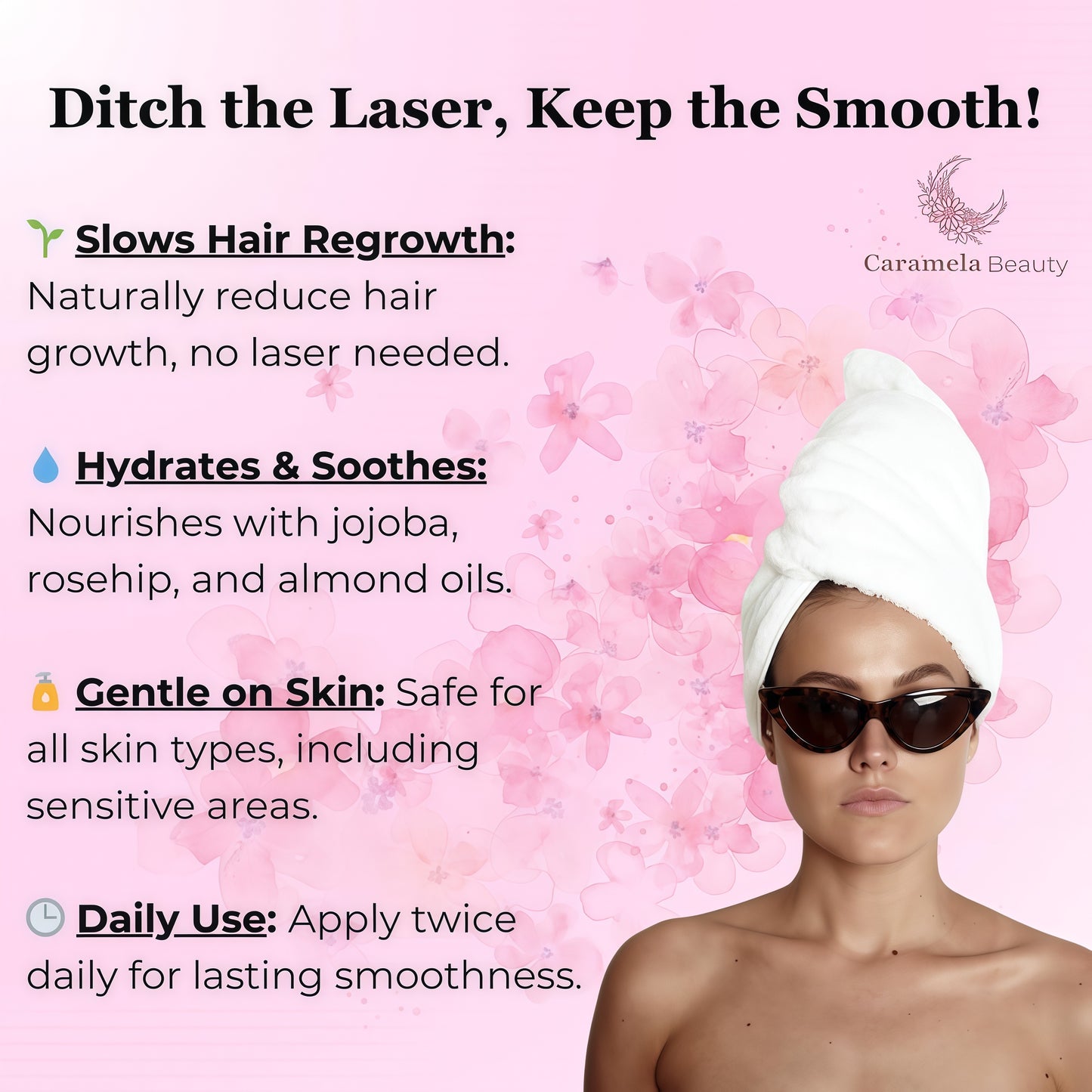
Helps Slow Down Hair GrowthAfter 6 Weeks of Use!


Everything you need to know.
What does it actually do?
What does it actually do?
Caramela's Even Tone Serum fades dark marks — including post-hair-removal hyperpigmentation, sun spots, melasma, and acne marks — by inhibiting melanin production at the cellular level. Kojic acid and bearberry slow your skin's pigment factory; glycolic acid clears the surface so the brightened skin shows through.
How long until I see results?
How long until I see results?
Most people see softer marks at 4 weeks, meaningfully evener tone at 8 to 12. Brightening is slower than people expect because it works by cycling out melanin — which happens naturally over weeks. Consistency is the difference between 'it didn't work' and 'it worked beautifully.'
Are the actives really clinically studied?
Are the actives really clinically studied?
Yes — kojic acid, glycolic acid, alpha-arbutin (from bearberry), and centella all have peer-reviewed clinical evidence for the uses described. Note: this means the ingredients are studied, not that this specific product was the subject of a trial. Results vary by person.
Is it safe for sensitive skin?
Is it safe for sensitive skin?
It's formulated to be gentle — centella, aloe, and hyaluronic acid offset the glycolic acid — but it's still an actives-driven serum. Start every other night for the first week, build to nightly as tolerated. If you have very sensitive or compromised skin, patch test first.